What is SaaS? The Complete Software as a Service Guide for 2026
Everything you need to know about SaaS: what it means, how it works, real examples like Slack and Salesforce, business models, and how to build your own SaaS product.
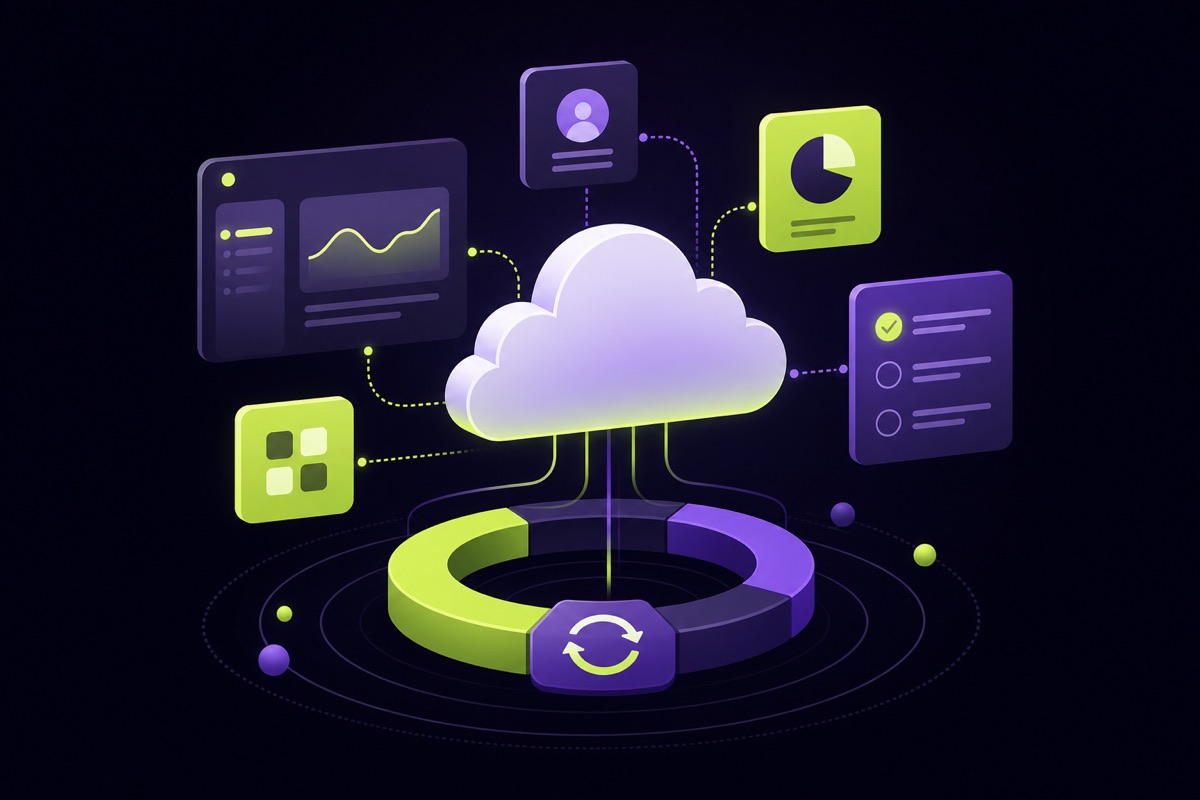
SaaS (Software as a Service) is a software delivery model where applications are hosted in the cloud and accessed via the internet, typically through a subscription. Instead of installing software on your computer, you access it through a web browser. Examples include Slack, Salesforce, Zoom, and Netflix.
How SaaS Works
SaaS is one of three main cloud computing service models, alongside IaaS (Infrastructure as a Service) and PaaS (Platform as a Service).
🖥️ IaaS
Infrastructure as a Service
- Rent virtual servers & storage
- You manage OS and up
- Examples: AWS EC2, Azure
⚙️ PaaS
Platform as a Service
- Development platform
- You focus on code only
- Examples: Heroku, Vercel
☁️ SaaS
Software as a Service
- Complete applications delivered over internet
- You just use the software
- Examples: Slack, Salesforce, Dropbox
How SaaS Works (Simple Explanation)
- Provider builds software and hosts it on cloud servers
- User signs up and creates an account (usually free trial)
- User accesses software through web browser or mobile app
- User pays subscription (monthly/annually) for continued access
- Provider maintains everything—updates, security, uptime
Famous SaaS Examples
You probably use SaaS products every day. Here are some of the most successful:
💬 Slack — Team Communication
Replaced email for internal team communication. Freemium model with paid tiers for larger teams.
Result: Acquired by Salesforce for $27.7B
☁️ Salesforce — CRM
Pioneered the SaaS model in 1999. Customer relationship management software that runs entirely in the cloud.
Result: $300B+ market cap
📹 Zoom — Video Conferencing
Video meetings made simple. Freemium model with 40-minute limit on free tier drove massive adoption.
Result: $20B+ market cap
🛒 Shopify — E-commerce
E-commerce platform that lets anyone create an online store. Subscription + transaction fees.
Result: $100B+ market cap
All these SaaS products: (1) Solve a specific problem well, (2) Have simple, intuitive UX, (3) Offer freemium or free trial, (4) Use subscription pricing, (5) Started focused and expanded later.
SaaS vs Traditional Software
📀 Traditional Software
- Download and install
- One-time purchase ($100-$1000+)
- Manual updates
- Only on installed devices
- Local data storage
☁️ SaaS
- Access via browser
- Monthly subscription ($10-$100/mo)
- Automatic updates
- Any device with internet
- Cloud data storage
Why SaaS won: Lower upfront cost, always updated, accessible anywhere, no IT maintenance for users. For providers: recurring revenue, direct customer relationship, faster iteration.
SaaS Business Models & Pricing
SaaS companies use various pricing models:
💰 Per-User Pricing
Charge per user/seat. Simple and predictable. Example: Slack charges $8.75/user/month.
📊 Tiered Pricing
Multiple plans (Free/Basic/Pro/Enterprise) with increasing features. Example: Zoom Free, Pro, Business.
📈 Usage-Based
Pay for what you use. Good for variable usage. Example: AWS charges per compute hour.
🎁 Freemium
Free tier with limited features, paid upgrade for more. Great for viral growth. Example: Dropbox.
Key SaaS Metrics
Churn Rate: Percentage of customers who cancel. Below 5% monthly is healthy.
NRR (Net Revenue Retention): Revenue retained from existing customers. 100%+ means growth without new customers.
LTV:CAC Ratio: Lifetime value should be 3x+ customer acquisition cost.
How to Build a SaaS Product
- Validate the Problem: Confirm people have the problem AND will pay.
- Build MVP First: Don't build full SaaS immediately. Start with MVP. Learn about MVPs →
- Choose Tech Stack: Frontend (React/Next.js), Backend (Node.js), Database (PostgreSQL), Payments (Stripe).
- Implement SaaS Features: Auth, subscriptions, billing, user roles, admin dashboard.
- Launch & Iterate: Release to early adopters, gather feedback, improve.
Almost always start with an MVP. Even if you're confident, an MVP lets you validate faster and cheaper. Add SaaS features after validating core value.
SaaS Development Cost
SaaS development costs more than MVP due to additional features. minidev.pro offers: MVP ($5,000 one-time) then Growth Partner ($5,000/month) for ongoing SaaS development.
Thinking of building one? Start with the 7 steps to build an MVP, then price it with the MVP cost calculator.
Ready to Build Your SaaS?
Start with an MVP in 30 days, then grow with our monthly retainer. Senior developers, fixed pricing.
Get Free Strategy Call →